Crocus Coaching and Development logo image
Coaching & Development Professionals
19
APR
2014

Intel introduce Mindfulness for all..
Here and now past present future sign post imageIntel are launching a massive plan to bring Mindfulness to 100,000 employees in 68 countries. Employee volunteers who will be chosen very carefully will be trained and practiced in Mindfulness before they role the programme out to the masses. Well done Intel for following the likes of Google and Twitter. I believe we will start to see more of the large corporate bringing in ‘Mindfulness’ for employees.

Companies I have facilitated Mindfulness sessions with have all benefited from positive feedback, reflections and improved employee engagement. It’s the small to medium companies that I feel can really benefit, where sometimes polices and procedures are not always so clear and engagement surveys are not always in place, therefore the employees can be working in stressful, fractious environments. I certainly feel mindfulness can help build an engaged workforce who are more productive, self aware, non judgmental, focused and demonstrate compassion to others and themselves. All resulting in a win win for both the company and the employee.

What are your thoughts and experience of Mindfulness in the workplace?

Here at Crocus we have experience of delivering Mindfulness sessions to employees, trainers and individuals, if you are interested and wish to chat through ideas and options please contact myself directly.

eMail: suzanne @ crocuscoaching.co.uk

https://crocuscoaching.co.uk/mindfulness/

subscribe by emailSubscribe to the Crocus Coaching & Development Newsletter.

31
MAR
2014
subscribe by email

subscribe

Stay in Touch with all the Crocus Coaching & Development News and Articles by email.

Just add your email address in the box below and hit the Subscribe Button

subscribe by email

Subscribe to the Crocus Couaching Newsletter
Keep in touch for interesting articles from Crocus Coaching
* = required field
15
MAR
2014
Frog with spawn

New Beginnings

Female Frog and Frogspawn

Spring is in the air at last, the Crocus have bloomed, the Dafs are reaching sky high and the Frogs are croaking in chorus as they enjoy some afternoon delight in the sunshine.

Here at Crocus Coaching and Development we are enjoying a busy start to the year, working with companies whose employees are fully engaged in their development and looking to become the best they can be…what an amazing job I have and equally  wonderful people with whom I work alongside.

Today was another day of facilitation around ‘Maximising your energy and time’ and ‘Presentation skills’ It was thought provoking asthe attendees travelled along an emotional journey  they experienced, relief, enlightenment, tears, moments of anxiety, laughter, fits of giggles, light bulb moments, knowledge, tips, friendship, empathy, feedback…the list goes on. Above all each person experienced a memorable feeling and as a result they will possibly do something different with their lives. 

Spring has sprung …new beginnings.

“I’ve learned that people will forget what you said, people will forget what you did, but people will never forget how you made them feel.”  Maya Angel

Suzanne Izzard

29
MAY
2013
Coaching and Training tool kit

Learning and facilitation models and techniques

Coaching and Training learning and facilitation modules techniques tool kit

The following are some of the tools and techniques that inform our facilitation and design

Click headings below to read about each technique

  • Appreciative Inquiry (AI)

    Appreciative Inquiry is a change methodology developed by David Cooperrider. It offers an alternative approach to achieving organisational growth and development. It focuses on increasing what an organisation does well rather than on getting rid of what it does badly. Through an inquiry which appreciates the positive and engages all levels of the business it seeks to grow, rebuild, develop and build on this.
    Appreciative-Inquiry AI Diagram image Appreciative Inquiry is a collaborative, strength-based approach to both personal and organisational development that has proved highly effective in many organisations, schools and communities around the world. It is a way of bringing about change that shares leadership and learning – fully engaging everyone in the organisation. Instead of asking questions such as “What are the problems?”, “What’s wrong?” or “What needs to be fixed?” AI takes an alternative approach, it asks questions like “What’s working well?”, “What’s good about what you are currently doing?” Appreciative Inquiry looks to use ways of asking questions to look to the future and foster positive relationships and build on the present strength’s and potential of a person, business or situation. Appreciative Inquiry uses a four step cyclical processes although many people like us here at Crocus now add a fifth, Define before Discover: DEFINE: The focus of the Inquiry or the change required DISCOVER: The identification of organisational processes that work well. DREAM: The envisioning of processes that would work well in the future. DESIGN: Planning and prioritising processes that would work well.DESTINY (or DELIVER): The implementation of the proposed design.
    Books
    Appreciative Inquiry for Change Management by Sarah Lewis and Jonathon Passmore

  • Change curve

    The Change Curve is based on Elizabeth Kubler-Ross’ research into the emotional stages we go through following the loss of someone. This has been developed into a model that can be used to highlight the sequence of responses people go through following a change. It’s useful as once individuals recognise the stages they are going through they can understand that they are not alone and that their reactions are ‘normal’. This can help them to work through the support they need to move forward. The model also enables leaders to balance their approach during times of change by appreciating the potential impacts on their people and working out what leadership they need to provide to minimise disruption.
    William Bridges research on change suggests that people are actually quite resilient to change – as human beings we encounter it on a fairly regular basis! What can get in the way are the transitions that accompany a change. He explains that changes are situational e.g. a new manager, a new office, a new team etc. but that transitions are psychological. Bridges describes three phases that people need to internalise and come to terms with to move forward successfully:

    • Ending
    • Neutral zone
    • New beginning

    Transition management focuses on the work that needs to be done to support people through change and how you can lead employees through to engagement in a way that makes everyone feel more comfortable.

    Books:
    Managing Transitions, Bridges
    Making Sense of Change Management, Cameron & Green
    The Kübler-Ross change Curve diagram image
    Books:
    Making Sense of Change Management, Cameron & Green

  • Circles of concern

    This model was introduced by Stephen Covey in his book ‘The 7 Habits of Highly Effective People’. It helps individuals to identify things that are within their control and those that they can do nothing about. It can increase awareness of how proactive an individual is by reviewing where they typically spend their energy and time. It’s also a powerful tool in times of change as it helps people shift their focus from decisions that they have no power over to factors they can control and influence. For example you can ask your coachee to map everything in their circle of concern and then decide what can be included in their circle of influence. This helps the coachee to focus their energy productively on the things they can change and ‘let go’ of those they can’t.

    Circle of Concern diagram

    To find out more:
    Books:
    The 7 Habits of Highly Effective People, Covey

  • Emotional Intelligence (EI)


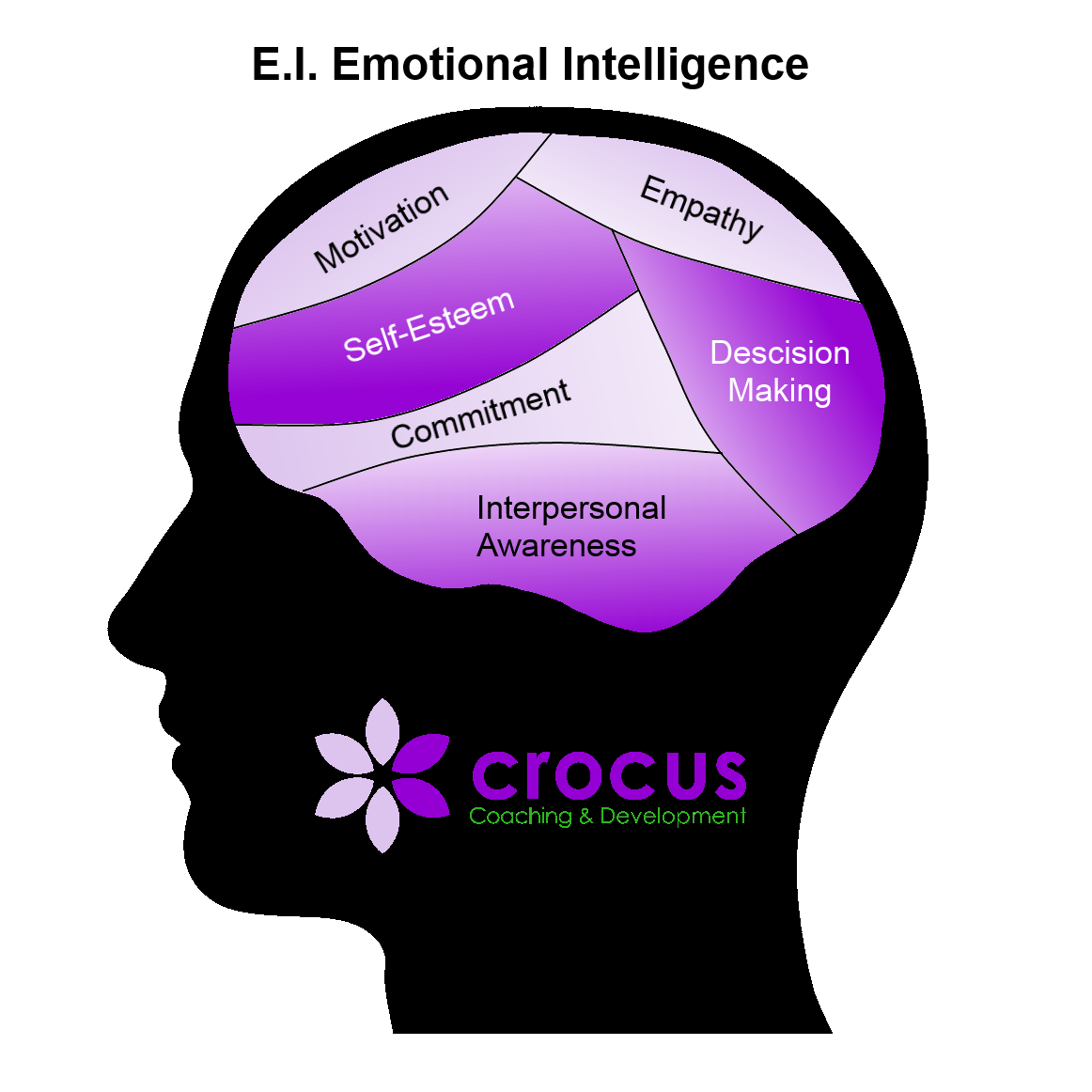
    This has been largely popularised by the work of Daniel Goleman and Richard Boyatzis. It is about effectively understanding yourself and others, relating well to people and adapting and coping with the immediate environment in order to be more successful. Goleman describes four areas – self-awareness, self-management, social awareness and relationship management as well as a set of emotional competencies. The theory suggests that individuals are born with a general emotional intelligence that determines their ability to learn and develop emotional competence. EI helps leaders to understand themselves and those around them. It challenges managers to think less about ‘what’ they know and more about how they interact and manage their emotional states.
    Emotional Intelligence EI Diagram
    Books:
    Emotional Intelligence, Goleman
    Primal Leadership, Goleman, Boyatzis & McKee
    Emotionally Intelligent Living, Orme
    Taming your Gremlin, Carson

  • Myers Briggs Type Indicator (MBTI)


    This is a psychometric tool that looks at individual preferences. It’s a useful tool for understanding how people prefer to operate and therefore the behaviours and communication styles that we typically use. It’s great for understanding and appreciating difference. Once you understand your own preferences you can then start to understand how others are similar and different to you. It has many uses, including working with teams at all stages, enhancing communication, building relationships and also with individuals who want to be more self aware.
    Myers Brigs Type Indicator MBTI
    Books: Isabel Briggs Myers

  • Situational Leadership


    This model was created by Ken Blanchard and Paul Hersey. It states that effective leaders need to be flexible and therefore adapt themselves according to the situation and needs of their people. It describes 4 leadership styles – directing, coaching, supporting and delegating and highlights when to use them in terms of the amount of direction and support that a leader needs to provide for their team member. Situational Leadership helps managers to understand that there are different leadership styles rather than thinking that one size fits all. Adopting these principles helps managers improve their delegation and build an environment of trust and self-reliance in the team.
    Situational Leadership
    Books:
    The One Minute Manager, Blanchard
    Self Leadership, Blanchard
    Leading at a Higher Level, Blanchard

  • Thomas-Kilmann Conflict Mode Instrument


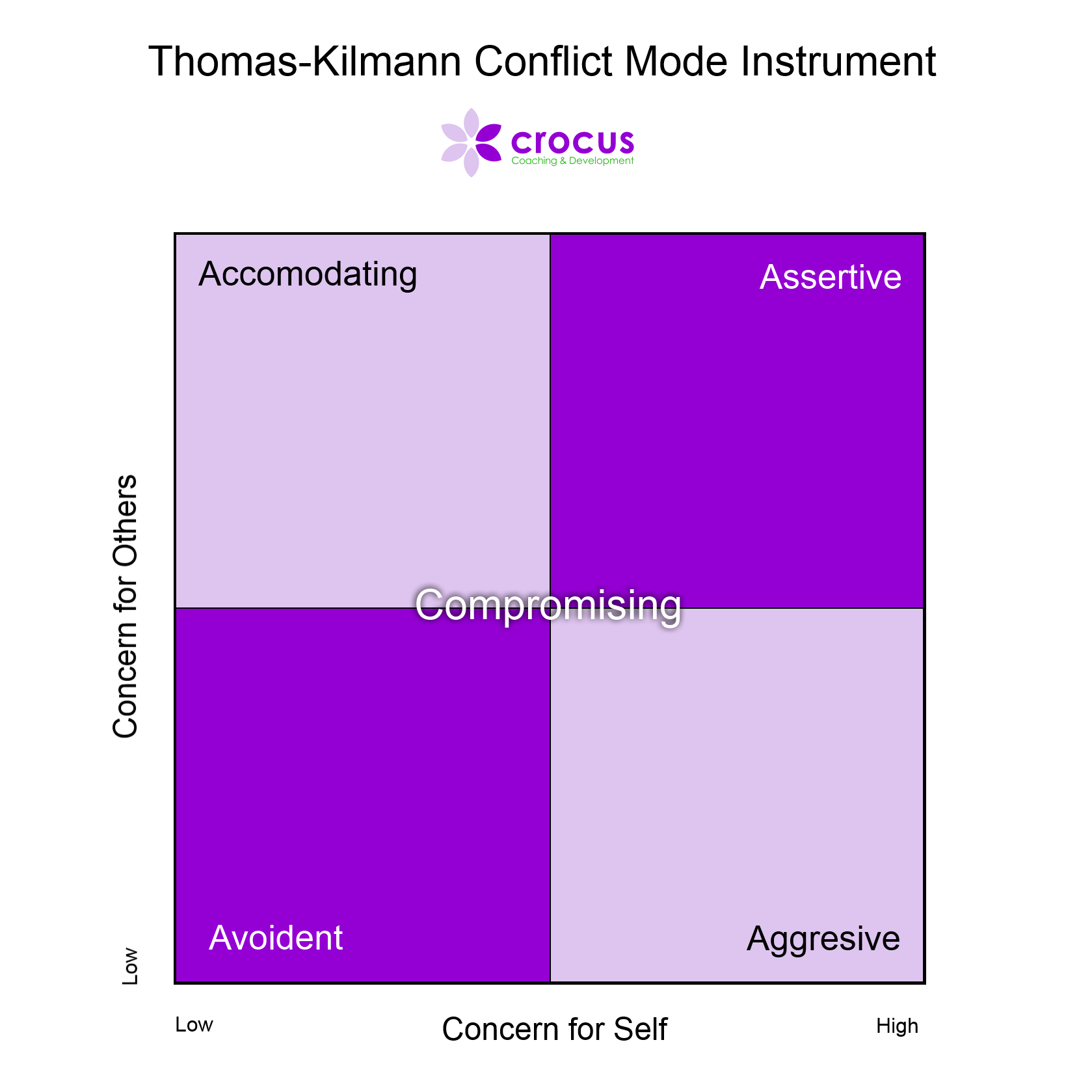
    This assesses an individual’s behaviour in situations where there are opposing views. It helps people to discover how they prefer to handle conflict in terms of five styles – competing, accommodating, avoiding, collaborating and compromising. Exploring this provides a deeper understanding of the dynamics of conflict situations and helps to identify effective resolution approaches.
    Thomas Kilmann Conflict Instrument diagram

  • Transactional Analysis (TA)

  • Tuckman’s Stages of Team Development


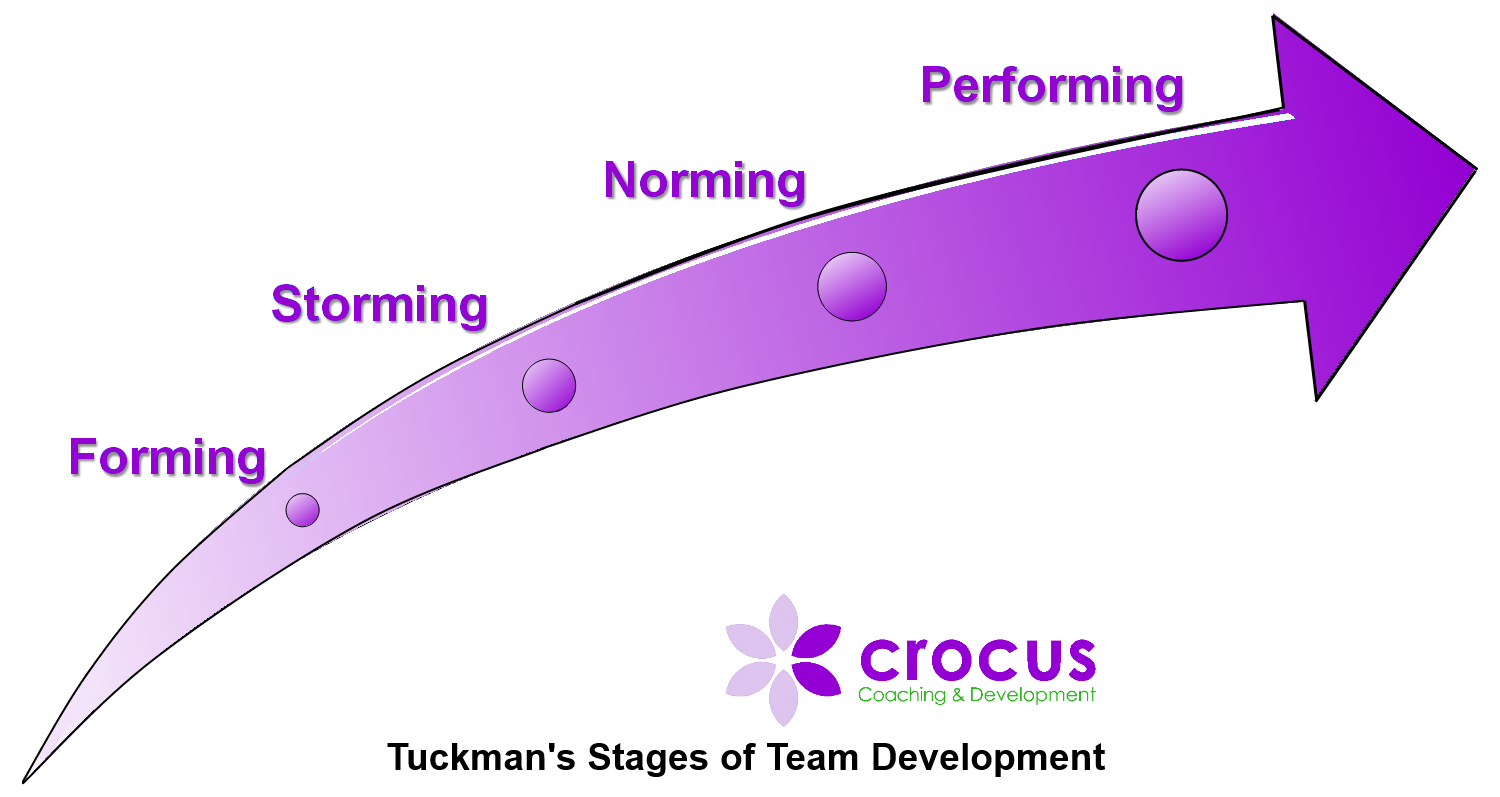
    Tuckman’s model of team development involves the stages of Forming, Storming, Norming, Performing and Adjourning. It describes the stages a team go through in terms of their working relationships and productivity. Leaders can use this to identify where their team is and what is needed to move towards high performance. It’s particularly useful for newly formed teams or teams who are experiencing a new dynamic due to changes in membership. Recognising where you are as a team will enable you to think through and agree principles and values for how you want to work together to deliver.
    Tuckmans Stages
    Book:
    Forming-Storming-Norming-Performing, DonaldB.Egolf

  • Use of self


    This is referred to by Peter Bluckert as ‘the highest order coaching skill’. It involves the coach putting into words the insights they are gaining about what is happening between them and the coachee. These are very intutive moments and the challenge is to be able to describe them in a way that provokes ‘in the moment’ insight in the coachee. The mainlearning here is that the dynamics that play out in the coaching realtionship may be a mirror of what the coachee is experiencing in the workplace in terms of their interactions.
    use of self coaching
    Books:
    Psychological Dimensions of Executive Coaching, Blucket

  • The here and now


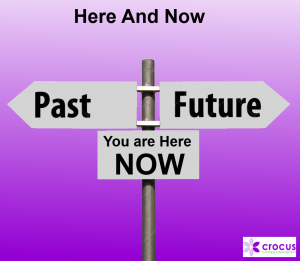
    This technique originated in Gestalt therapy and is about what is being experienced in the present moment. It highlights that most conversations are about the past and future but little attention is paid to what is happening now in the room. A classic here and now question is, “What are you aware of right now as you tell me this?” This focus helps to deepen the coachee’s connections to what they are really feeling and thinking about a particular issue.
    Here and now past present future sign post image
    Books:
    The Red Book of Gestalt, Houston
    Psychological Dimensions of Executive Coaching, Bluckert

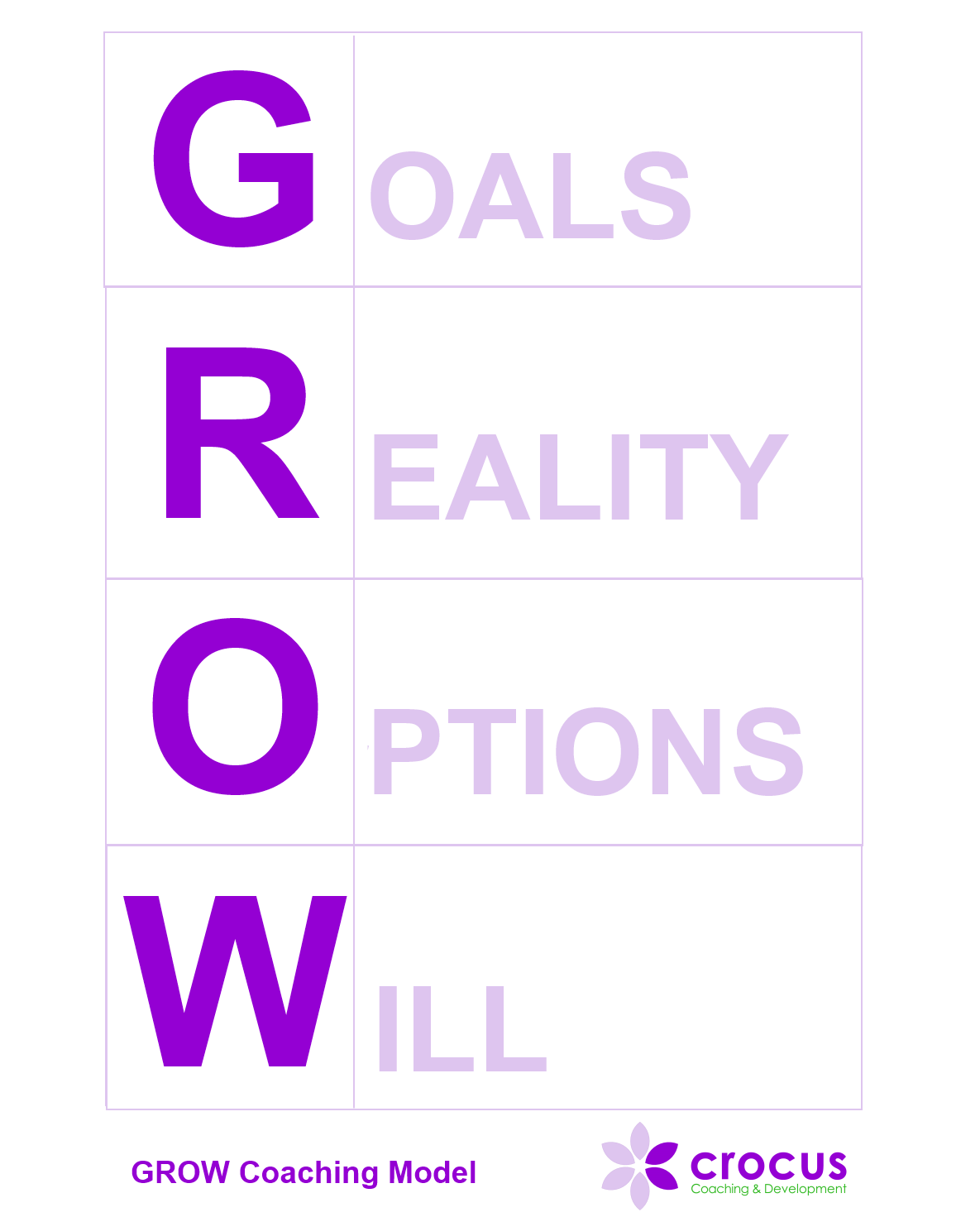
  • GROW coaching model

    GROW Goals Reality Options Will Diagram

    During the mid to late 1980’s Graham Alexander, Sir John Whitmore and Alan Fine developed the GROW model for coaching. Whitmore a motor racing champion and Fine a tennis champion coach brought it to the corporate arena in the early 1990’s.Having worked with athletes it was recognised that people often know what to do but often didn’t do what they know and the GROW model was a methodology that helped awaken their awareness. It is now one of the most widely used and recognised coaching models in the world today.

    Why it’s used

    Coaching is rapidly growing in its use in organisations, and is evolving all the time. The GROW model, although structured is simplistic and flexible to use. It can be used in many situations including individual face to face and telephone coaching, group coaching, and group meetings. It is designed to allow the coach to ask the questions to help the coachee/s to explore their own thought process and awaken their awareness and ensures they work towards some kind of action or outcome to bring about change. The latest CIPD (Chartered Institute of Personnel and Development)Coaching and Mentoring report shows that it is often used for the following:

    • Supporting people through change
    • Lifelong learning
    • The need for targeted, individualised, just-in-time development
    • Improving the decision making of senior employees
    • Individual responsibility for development
    • Employee demand for different types of training
    • Support for learning and development activities
    • A popular development mechanism

    Books:
    Coaching for Performance, Whitmore John

  • 70-20-10 model


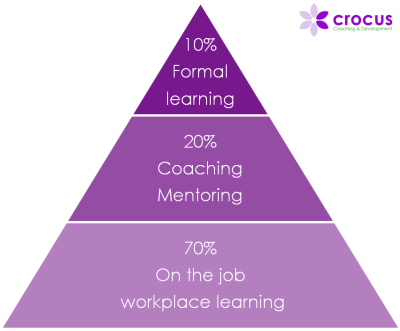
    70% of learning takes place on the job, through solving problems and through special assignments and other day-to-day activities.
    20% is gained when collaborating and when in dialogue through coaching, mentoring and learning from others knowledge and expertise.
    10% occurs through formal learning, this can be in a workshop, e-learning or classroom.
    It fits well with ‘just in time’ learning, we often learn things ‘just in case’ however in today’s world things change very quickly and so weis better to learn what you need when you need it.Here at Crocus all our course participants have access to bespoke online resources to refer too, to support that ‘just in time’ learning via their tablet, android, i-pad, phone, etc.
    At Crocus we use the 70-20-10 methodology when designing workshops. We want to ensure that participants will take away tools, techniques and ideas that they can use immediately in their workplace or in life (70%).We suggest this is followed up with coaching, mentoring or we help the participant and/or organisation to set up the support required to ensure the learner gets the right feedback, encouragement and management (20%). This will help embed, grow and develop the learning and the participant will then become a success.
    70 20 10 Development Module pyramid diagram

12
MAR
2013

Business Mentoring

Business mentoring is to support and encourage people to progress in their businesses and help mentees realise their potential. It can often be lonely at the top or working in your own business, mentoring offers a partner enabling you to share ideas, vision and views with someone who has experience, knowledge, influence and a good network and pair of ears!

The mentor relationship help you gain fresh insights into problems and decision making, through impartial, objective discussion and feedback.  This means:

  • Your energy is better focused
  • You reduce the level of risk in making business decisions
  • You make positive progress quicker

You also have somebody who can challenge you, add to your skills, maintain your motivation and celebrate your successes.

Crocus Mentoring and Training Courses

Mentoring – One to One

  • Regular sessions preferably face to face, however these can be via Skype, telephone and online too.

Set up of Mentoring Schemes and Programmes in your business

  • What kind of mentoring is needed most within the workplace?
  • Do you require career development mentoring, or task-based coaching?
  • What issues need to be addressed and who would be best suited to provide guidance?
  • Is mentoring sufficient, or would coaching or training be more appropriate?
  • Let us help you and share our knowledge and expertise on setting up an In-company Mentoring scheme


In-company mentor training

Whether your company has experienced mentors or you are just starting to think about setting up a scheme, we can provide training to deliver the skills that your mentors need to be truly effective.


————————————————————————————————————-

Workshops available

Monday to Friday (Including some Saturdays)

Enquiries:-

For more information please contact 07956 376458 or Suzanne@crocuscoaching.co.uk

Register your interest

For regular updates, register your interest here to join our e-mailing list.

————————————————————————————————————–


02
MAR
2013
crocus coaching and development large logo image

About Crocus Coaching and Development

Suzanne Sutton-Izzard CEO Crocus Coaching and Development
Suzanne Sutton-Izzard – Director

Crocus Coaching and Development

Motivated and excited by coaching, learning and development; it is fundamental to us that people become proficient and shine in everything they do.

At present most companies are seeing the benefits of supporting and encouraging their people with coaching, learning and development, ultimately bringing engagement and a natural feed into their talent pipeline. Management & Leadership skills are fundamental in embedding and encouraging development within their teams.

What makes us different?

Today’s world brings complexity, ambiguity and a speed of change which requires more than a one-size-fits-all approach. Crocus has experience in design and facilitation to bring a tailored and specific approach that will meet the needs of your business and fully engage with you and your employees.

Crocus likes to work with you to develop and encourage your people, through coaching and development interventions. We feel it is important to understand what you are trying to achieve when developing a bespoke solution.

We aim to make the learning relevant, engaging, stretching, thought provoking, fun and ultimately deliver tangible results.

Read our testimonials to hear how we have made a real difference to companies and people’s lives or we can supply references from our recent clients for you to contact directly.

Please send an email to Suzanne @ crocuscoaching.co.uk or call on 07956 376458 for a chat to see how we can help you or your employees become the best they can be.

Companies we have worked with or are presently working with:

Deutsche Telekom, EasyJet Europe, Arradenne MFG, Pampered Chef, Executive Forum Alumni, Barclays Bank PLC, T-Mobile, Orange, EE, Hertfordshire County Council.

we are available via Email, Skype , Twitter, Facebook, LinkedIn … or email & face to face for the traditionalists among you  just click the Contact  for our contact details – we are looking forward to sharing your questions, thoughts, ideas & dreams and working with you to turn them into tangible positive outcomes.

So explore, discover, question, comment & share – we look forward to your enriching influence on our ever-evolving canvas and sharing your journey towards ultimate personal & professional fulfillment.

The Crocus is synonymous with beautiful simplicity, perennial growth & the peerless value of the saffron that it produces. We at Crocus Coaching and Development believe these same attributes are fundamental to happy, successful individuals who live highly fulfilled lives and constantly perform at very high levels.

Touch or hover your mouse pointer over the Crocus logo petals

28
FEB
2013
Crocus Coaching Training & Mentoring

Training

Training Overview

As professional Training Consultants Crocus has experience in facilitating and delivering a variety of personal and management development courses.

We use learning techniques that adapt to different learning styles and bring out the best in everyone.

Each course is designed to achieve specific learning objectives, is suitable for people at all levels and is available in a choice of interactive development workshops.

We know that each business is unique and has different requirements and needs. We can adapt and create bespoke programmes and courses to meet these needs.


All of our workshops are facilitated to encourage exploration, curiosity and the fundamental benefit of learning and sustaining this after the workshop. At Crocus we believe the 70-20-10 approach to development really embeds a participant’s learning and gives them the incentive to use all they have learned in the real world. Whether a two hour programme, a half or full day, our delegates leave with much more than knowledge, they leave with the benefit of a career and life developing experience.


70-20-10 Framework
70 20 10 framework

The 70:20:10 framework is a learning and development model that blends on-the-job experiences (70%), feedback, coaching and networks (20%) and formal courses or reading (10%) to achieve optimal results.

It is based on research by Morgan McCall, Michael Lombaro, Robert Eichinger and colleagues from the Centre for Creative Leadership.

I first came across 70:20:10 at a Learning and Development Conference in 2005 where I heard Charles Jennings speaking about Informal learning and I subsequently read ‘Informal Learning’ by Jay Cross which I found invaluable.

Suzanne Sutton-Izzard
Click below to discover the Training tools and techniques that inform our facilitation and design at Crocus Coaching
Training Techniques

28
FEB
2013

Business Coaching / Executive Coach

Top qualities: Great Results, Personable, High Integrity

As Business Management Consultants we can help with…

Executive Coaching – Group Coaching – Individual Coaching – Managing high performance – Aspiring leaders – Coaching through Change – Presentation skills – Time Management – Work life balance – Stress management – Coping with pressure – Communication skills

Every organisation needs great leadership

Businesses face constant challenges, uncertainty and transformation in today’s world. Senior leaders and Managers are put under more pressure to perform, lead and get results whilst keeping costs low and employees engaged. This can result in an environment where new work practices are required to enable rapid decision making, new thinking, and working with ambiguity, uncertainty and change. In our experience, in these situations, Senior Leaders value having an expert coach, the space to reflect and talk through situations and strategies. Feedback indicates that this significantly increases their personal effectiveness during these times.

Those who choose to learn Coaching Skills themselves and have a coaching mindset have sustained success with their teams and achieve great results.

Coaching is available to meet specific business challenges. Our one to one coaching offers a confidential relationship which provides trust, challenge, encouragement and practical actions. We believe working closely with an individual provides a real opportunity to identify and support priority areas of need within the business.

This creates a more robust and resilient transitional framework to deliver the outcome that is required.

One to One or Group Coaching

Suggested aims and topics

  • Leading through ambiguity and uncertainty
  • Leading through change and transitions
  • Communicate more effectively
  • How to manage and lead  people
  • Inspirational leadership
  • Be a great Mentor or Coach for others
  • Engaging Employees


In-Company Training   (on site or training centre)

Group courses available; please speak to us to discuss your requirements

Workshop example below:

Coaching and Mentoring Workshop – Day 1

  • Know the definitions and use of coaching, mentoring and counselling
  • Contracting and setting boundaries
  • Adopt a Coaching Mindset that meets the need of the individual and situation
  • Identify the skills and behaviours of a highly effective coach and mentor
  • Demonstrate using GROW coaching model in an appropriate context


Coaching and Mentoring workshop – Day 2 (can be 2-3 weeks after day 1)

  • Review of experience following day 1
  • Coaching supervision and discussion
  • Advanced techniques
  • Coaching models and conversational tools
  • Practice with feedback and completion of development plan

All courses have online resources for support and to keep the Crocus community collaborating and sharing (e.g. free members access online resource page)